
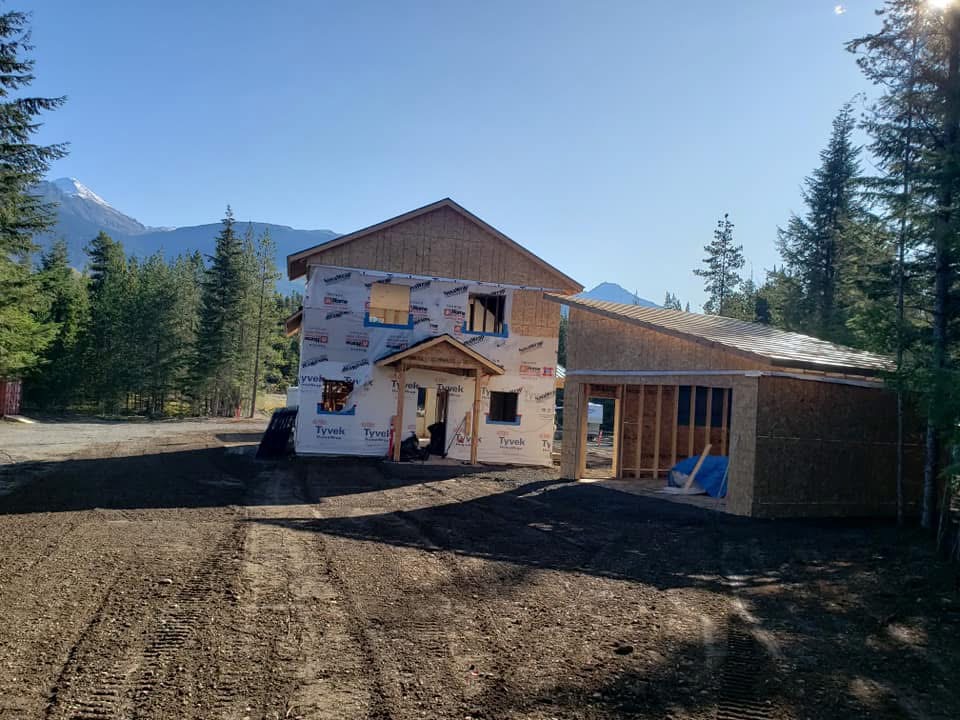
How your home sits on its lot has a greater impact on your daily experience — and your construction costs — than most clients realize before the process begins. Site planning is the discipline of analyzing your property's physical conditions and making informed decisions about where and how to place the home. Getting it right early saves money, reduces construction complexity, and creates a home that works with its site rather than against it.
Orientation: Work With the Sun
In BC's interior — where both cold winters and hot summers are realities — solar orientation is one of the highest-leverage decisions in site planning. A south-facing home captures passive solar heat gain in winter through well-placed glazing, reducing heating loads significantly. The same glazing managed with proper overhangs shades interior spaces in summer.
In the Okanagan specifically, managing solar gain in summer is often the priority — the valley is one of the hottest parts of BC, and homes that aren't designed to stay cool become uncomfortable and expensive to cool.
Topography and Slope
Sloped properties are common across BC and require careful site planning. The key questions are: where does the home sit on the slope, how is excavation managed, and where does water go? Steep lots also affect driveway grade, which must meet municipal standards for safe access.
Hillside homes often incorporate daylight basements — where one or more lower-level walls are exposed rather than fully buried. This adds livable square footage efficiently and can take advantage of views. Your contractor and design team should model the cut-and-fill volumes to understand the earthworks costs before design advances too far.
Drainage and Grade
Water management is a foundation-level concern. All sites must be graded to direct surface runoff away from the building. On flat lots, this requires positive grading away from the structure. On sloped lots, interceptor drains, swales, and retaining walls may all be part of the solution.
In the BC interior, spring snowmelt is a significant drainage event. Sites that aren't properly graded and drained are vulnerable to moisture infiltration into foundations, crawlspaces, and basements. This is significantly more expensive to address after construction than before.
Okanagan-specific note: Many properties in the North and South Okanagan fall within the Wildfire Interface Zone. This triggers requirements under the BC Wildfire Interface Building Code, including non-combustible soffits, screened vents, and ember-resistant decking. These requirements affect both design and material costs and should be identified before design begins.
Setbacks and Zoning Constraints
Every residential lot in BC is subject to zoning bylaws that define how close a structure can be to property lines (setbacks), how tall it can be, how much of the lot can be covered by structures, and where accessory structures can be placed. Before design begins, your contractor or designer should pull the zoning schedule for your lot and identify any constraints that affect building placement.
Utility Connections
The location of your home relative to existing utility connections (power, gas, municipal water and sewer) affects both cost and site planning. Properties that require long service runs from the road add cost. If your lot is not serviced by municipal sewer, a septic system must be designed and permitted — and the system's location (typically driven by soil percolation conditions) may constrain where you can build.
Access and Driveway Planning
Driveway grade, turning radius, and sight-line requirements are regulated in most municipalities. On tight or sloped lots, driveway design can be a significant design constraint. Emergency vehicle access requirements — particularly relevant in the wildfire interface zone — may also affect how the site is laid out.
A thorough site analysis at the beginning of the design process is one of the most cost-effective investments you can make. Problems discovered on paper are inexpensive. Problems discovered during construction are not. If you're planning a build and want to talk through your site's specific conditions, we're happy to walk through it with you.